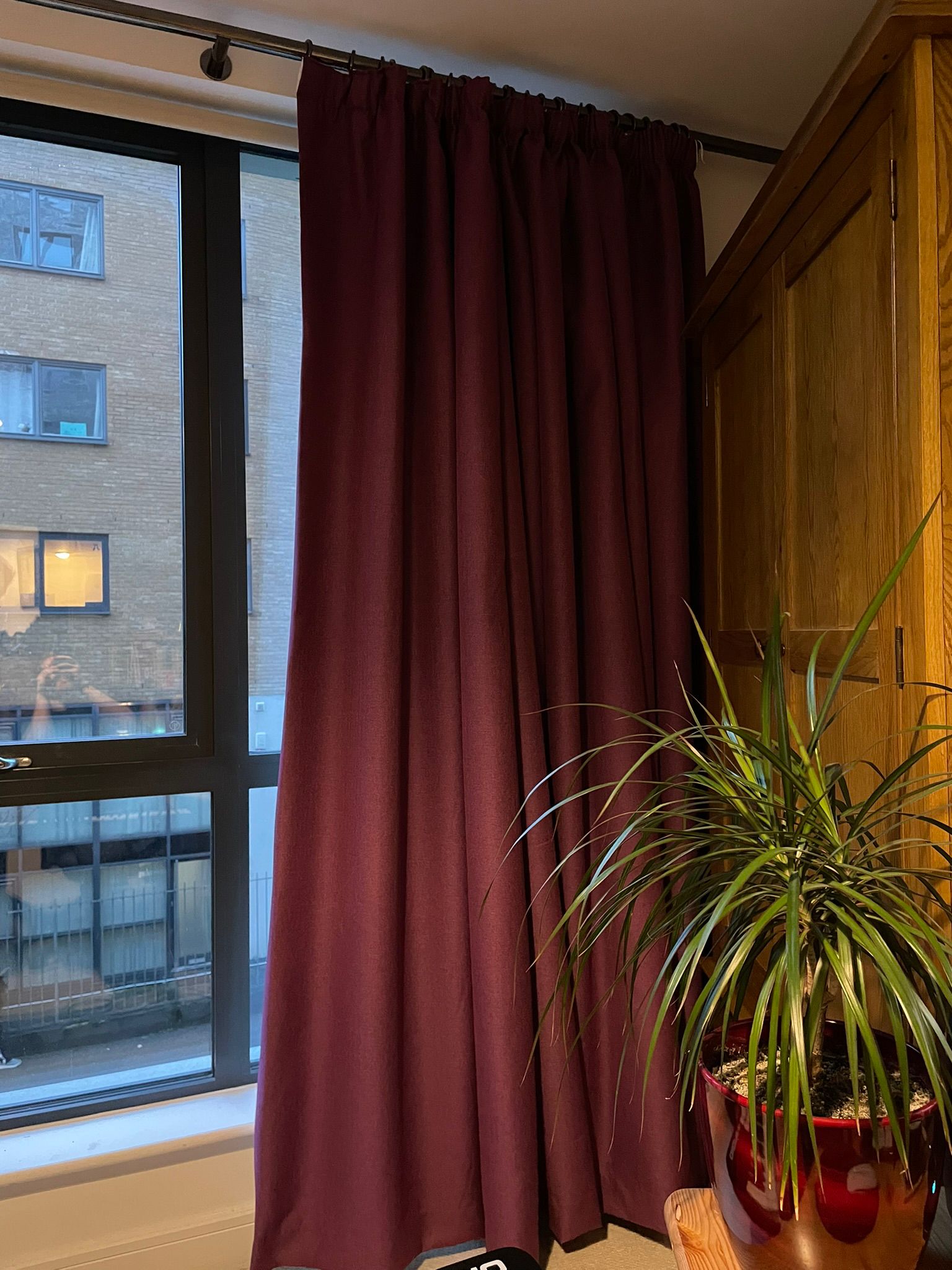
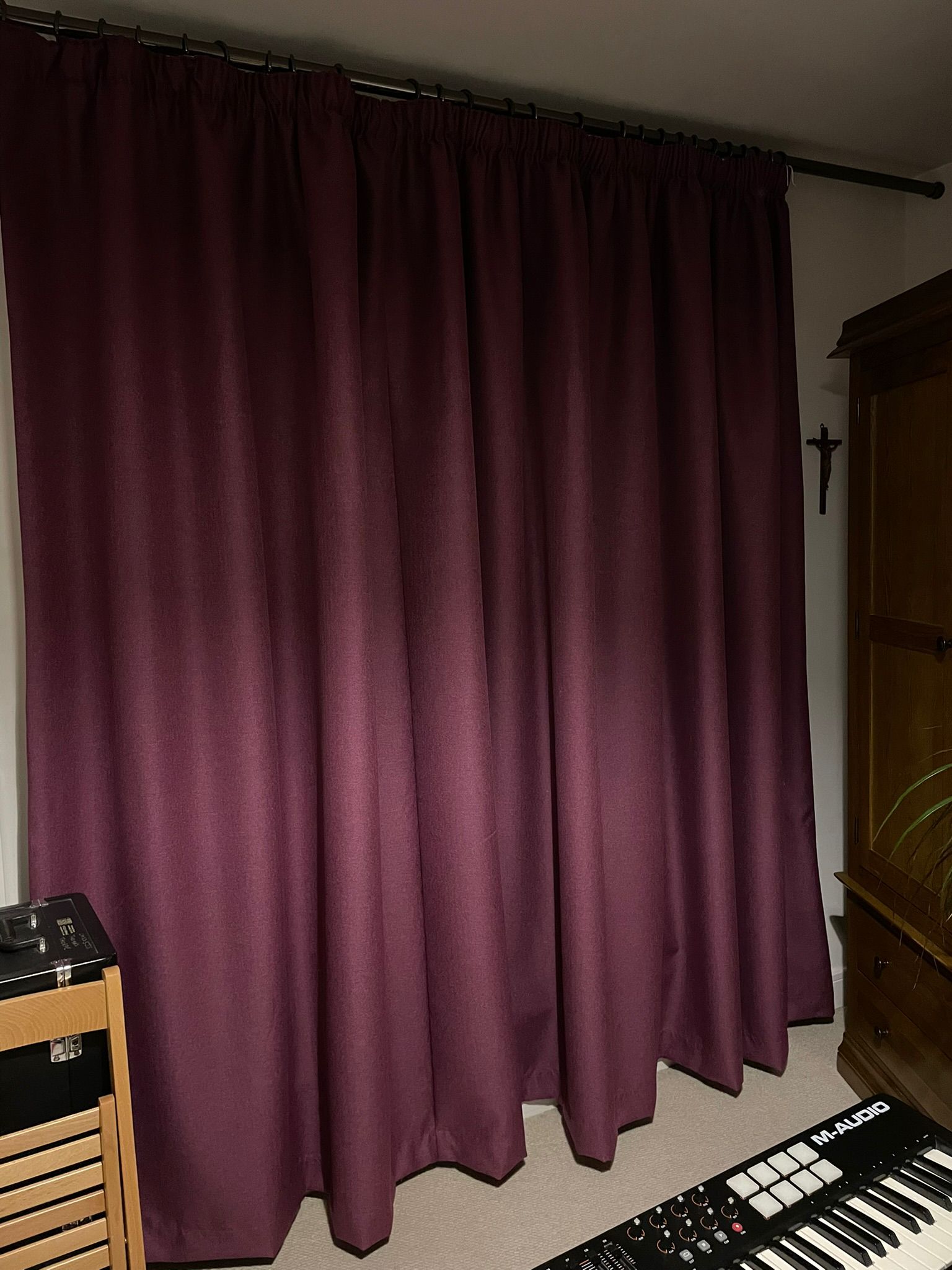
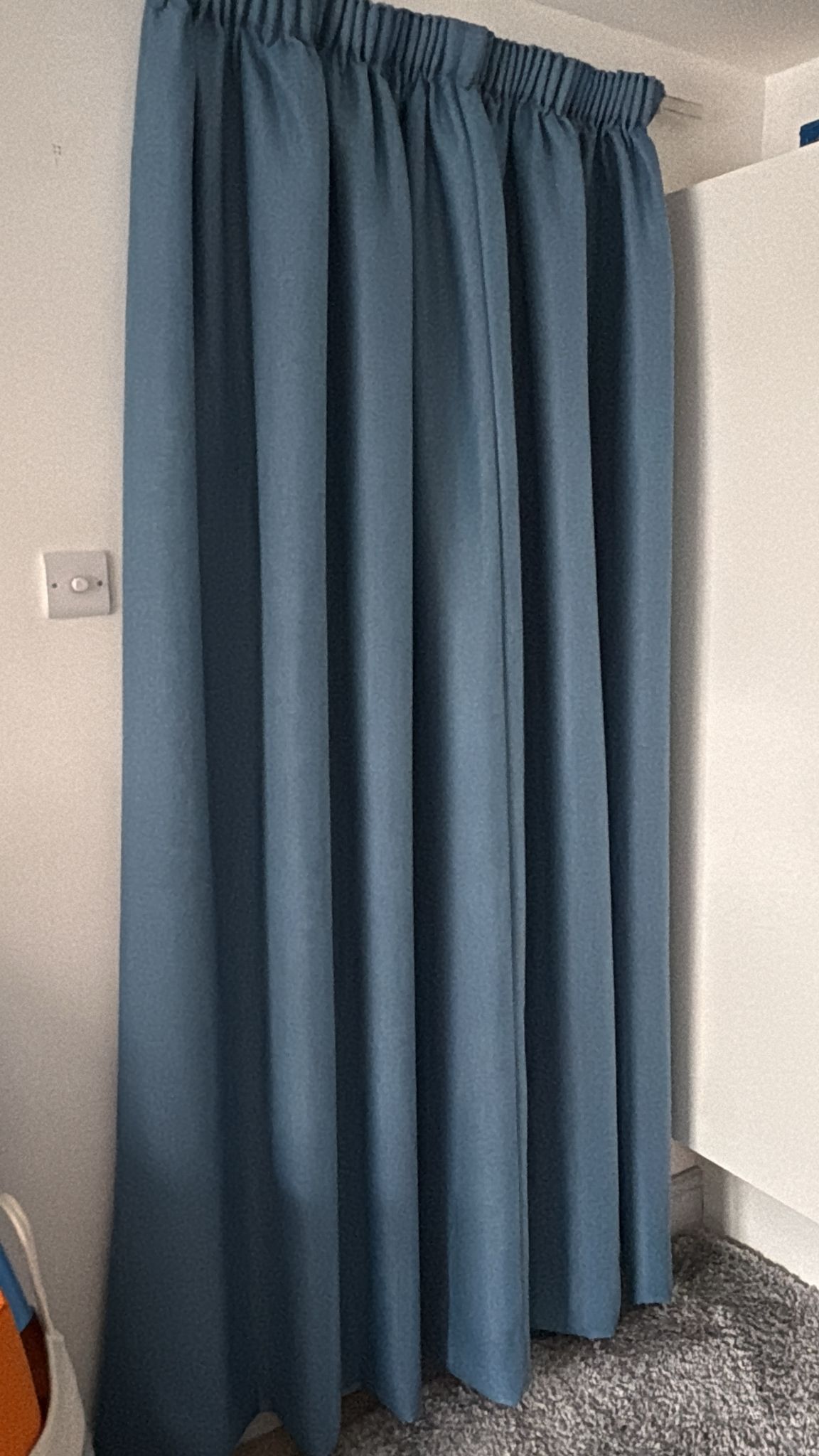
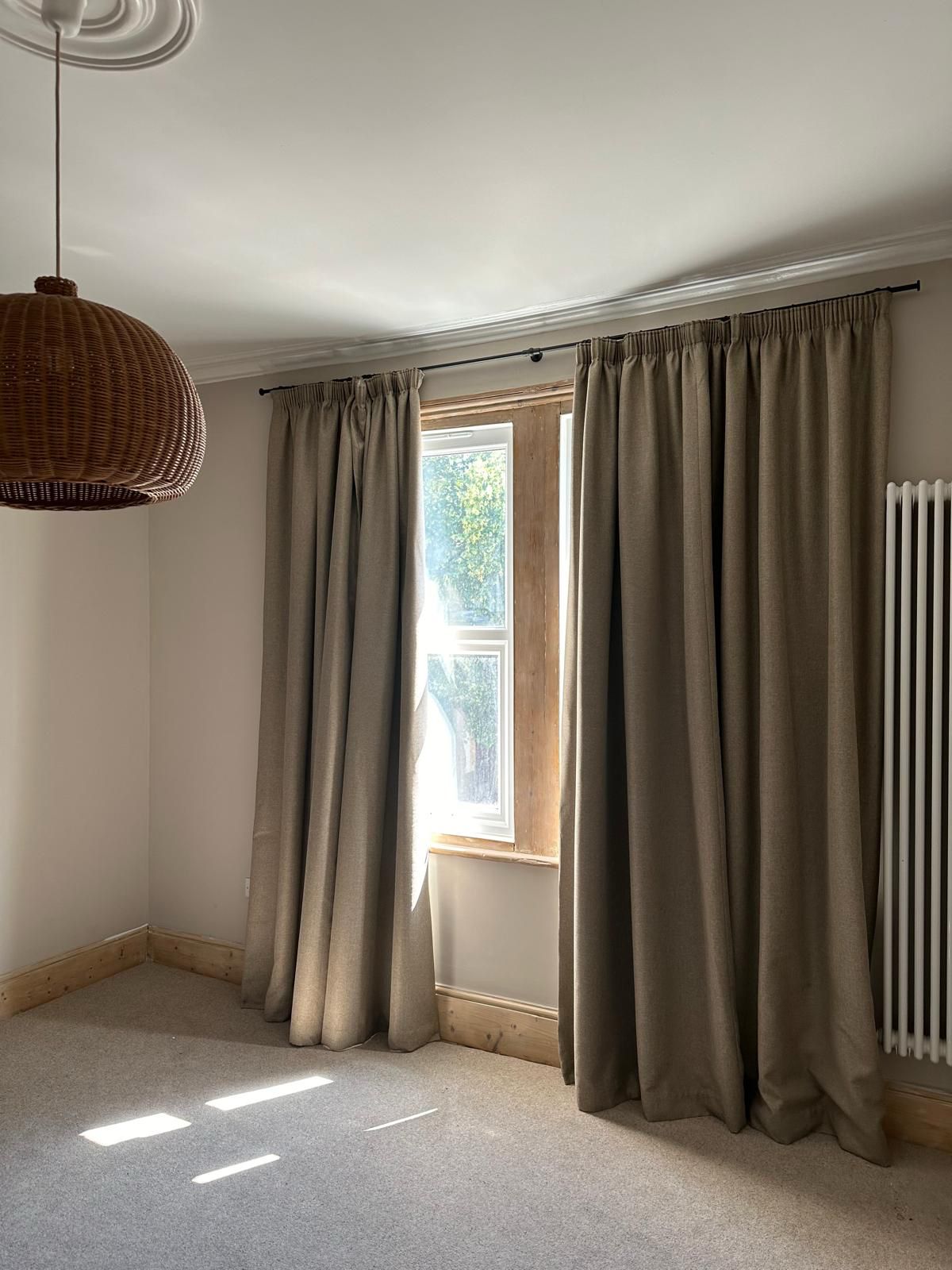
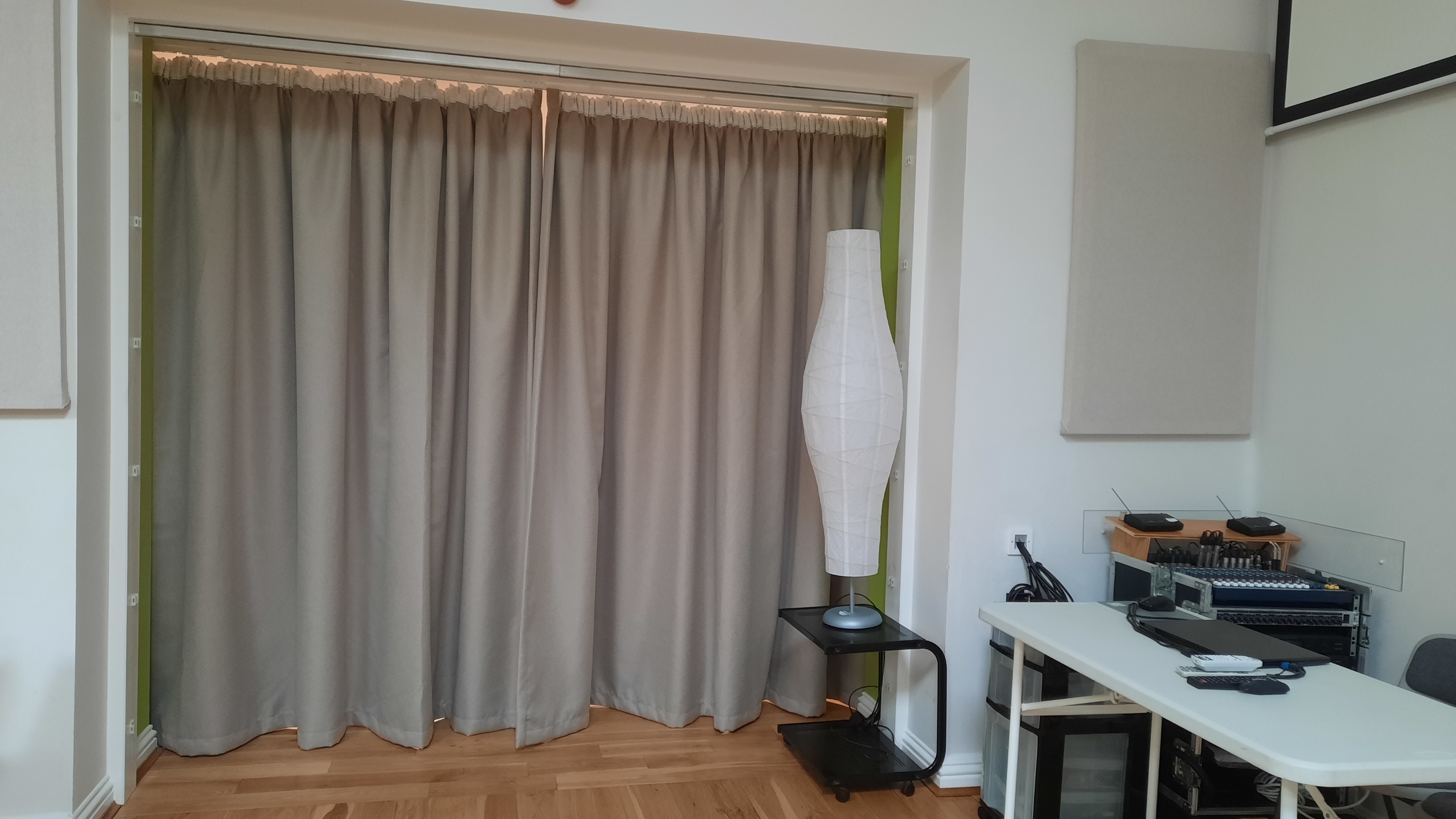
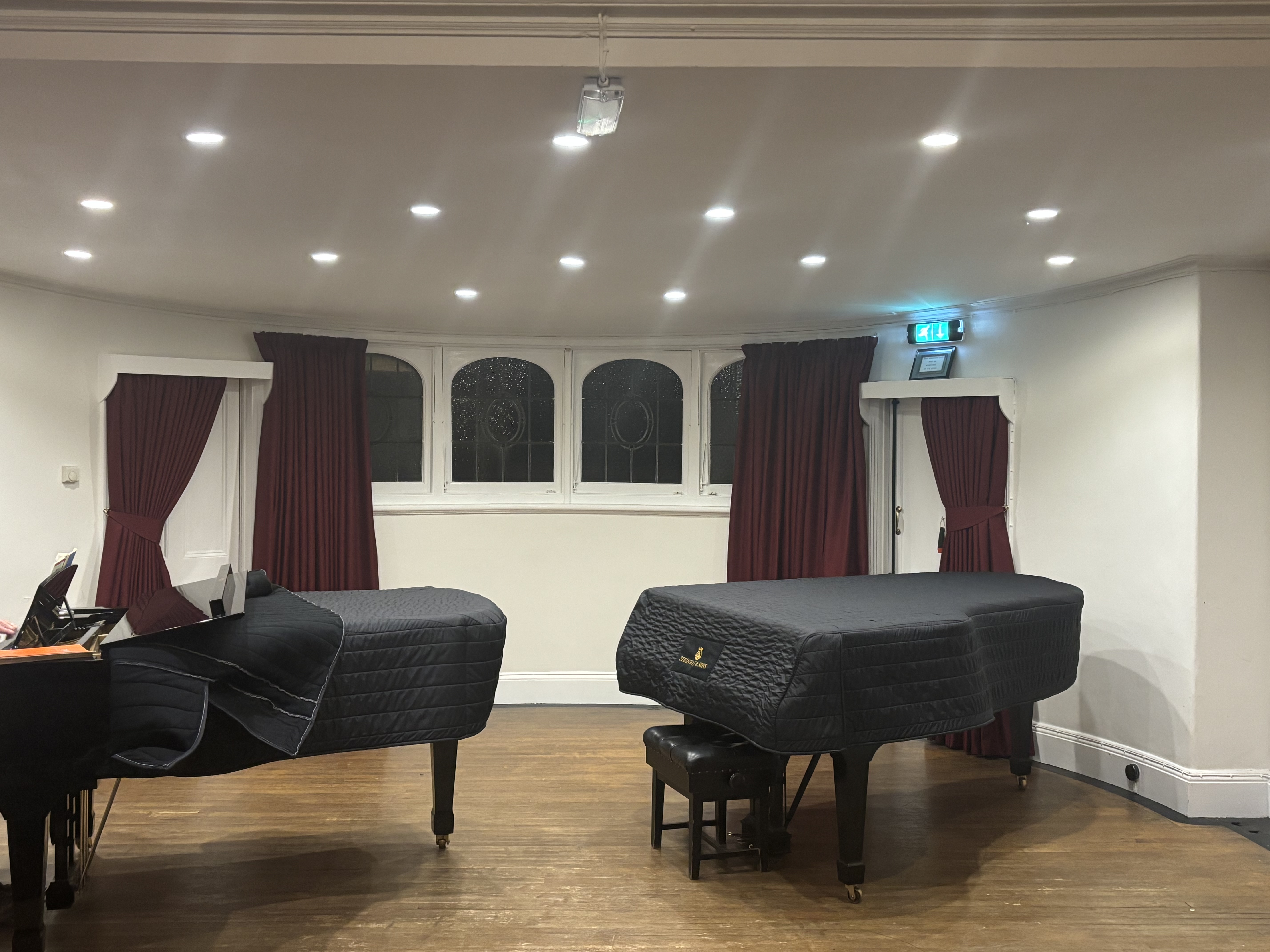
There are two distinct types of acoustic performance. Most buyers need the first. Understanding the difference helps you choose the right product and sets honest expectations before you buy.
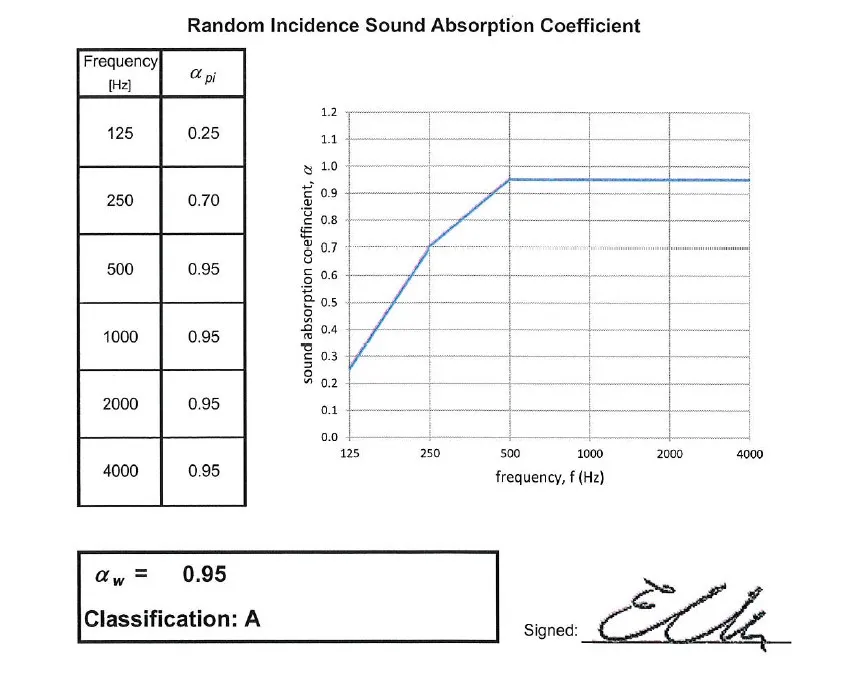
Sound absorption stops sound bouncing around inside your room. In modern homes with hard floors and bare walls, sound reflects aggressively, causing echo, harshness and fatigue. Our fabrics achieve Grade A absorption per EN ISO 354 (0.95 coefficient), the highest available rating. This is the most immediately noticeable benefit for most buyers.
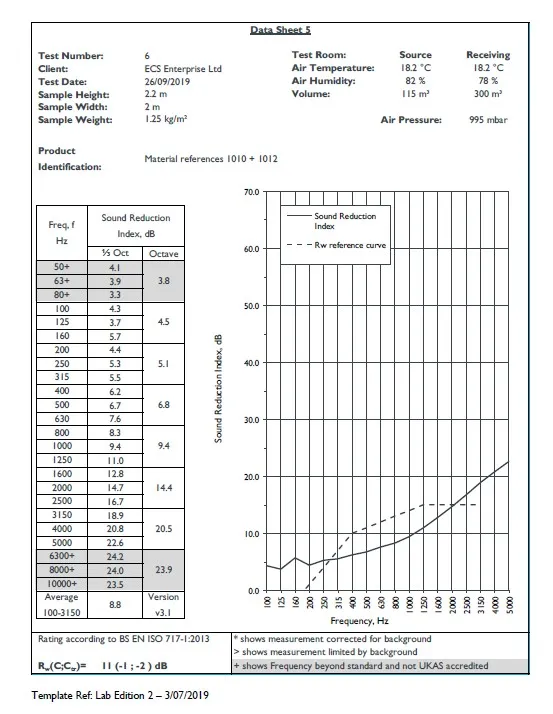
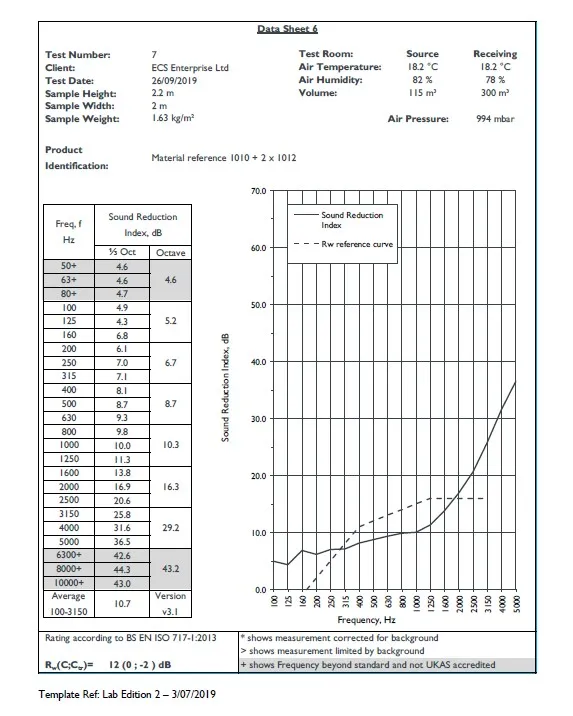
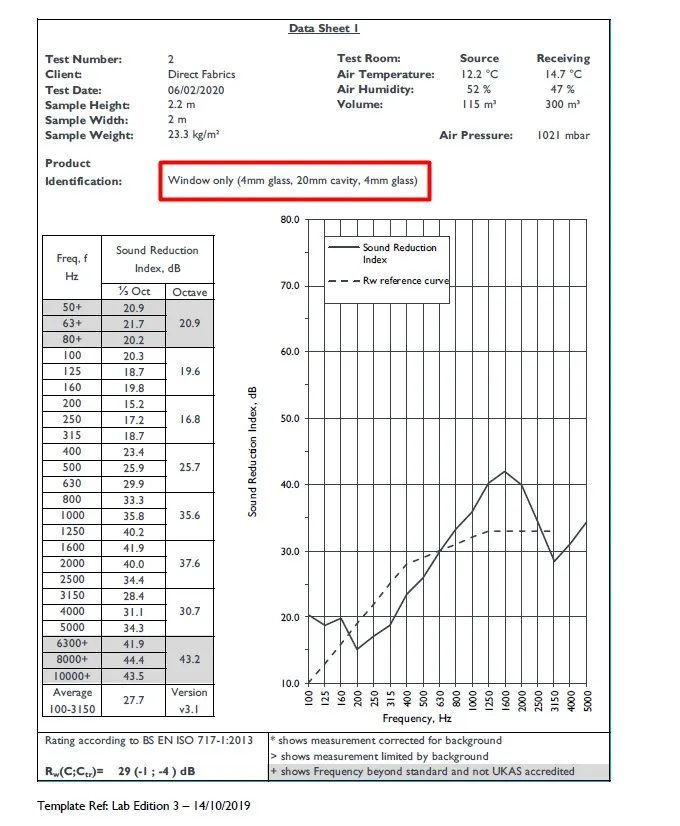
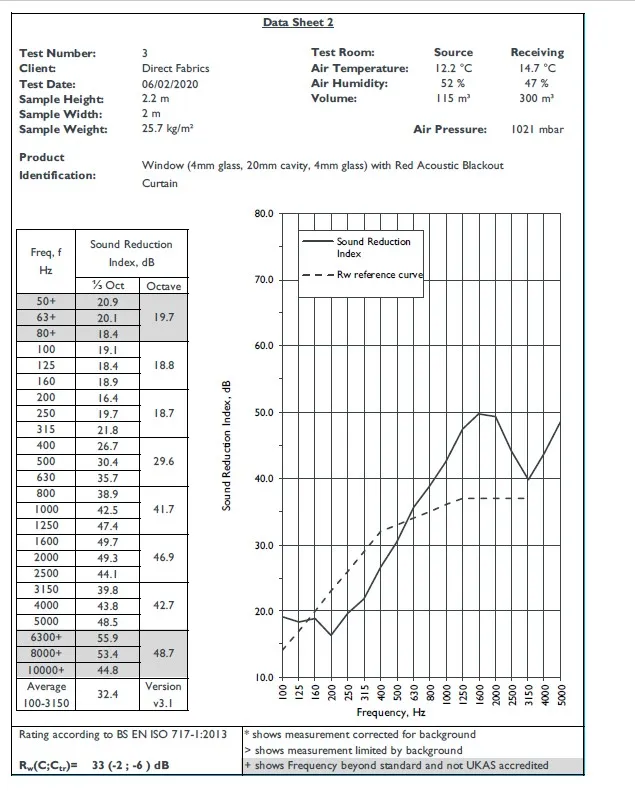
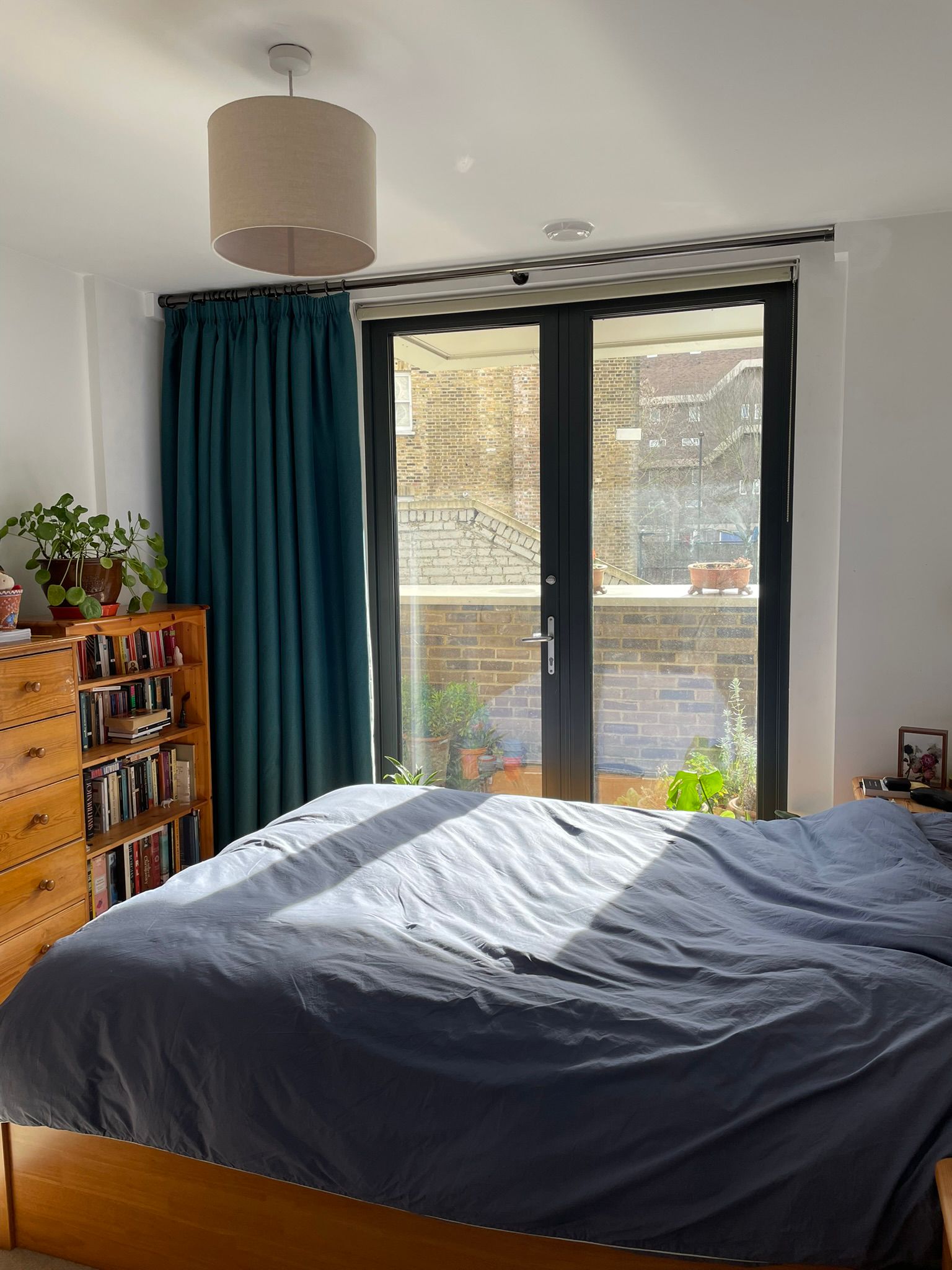
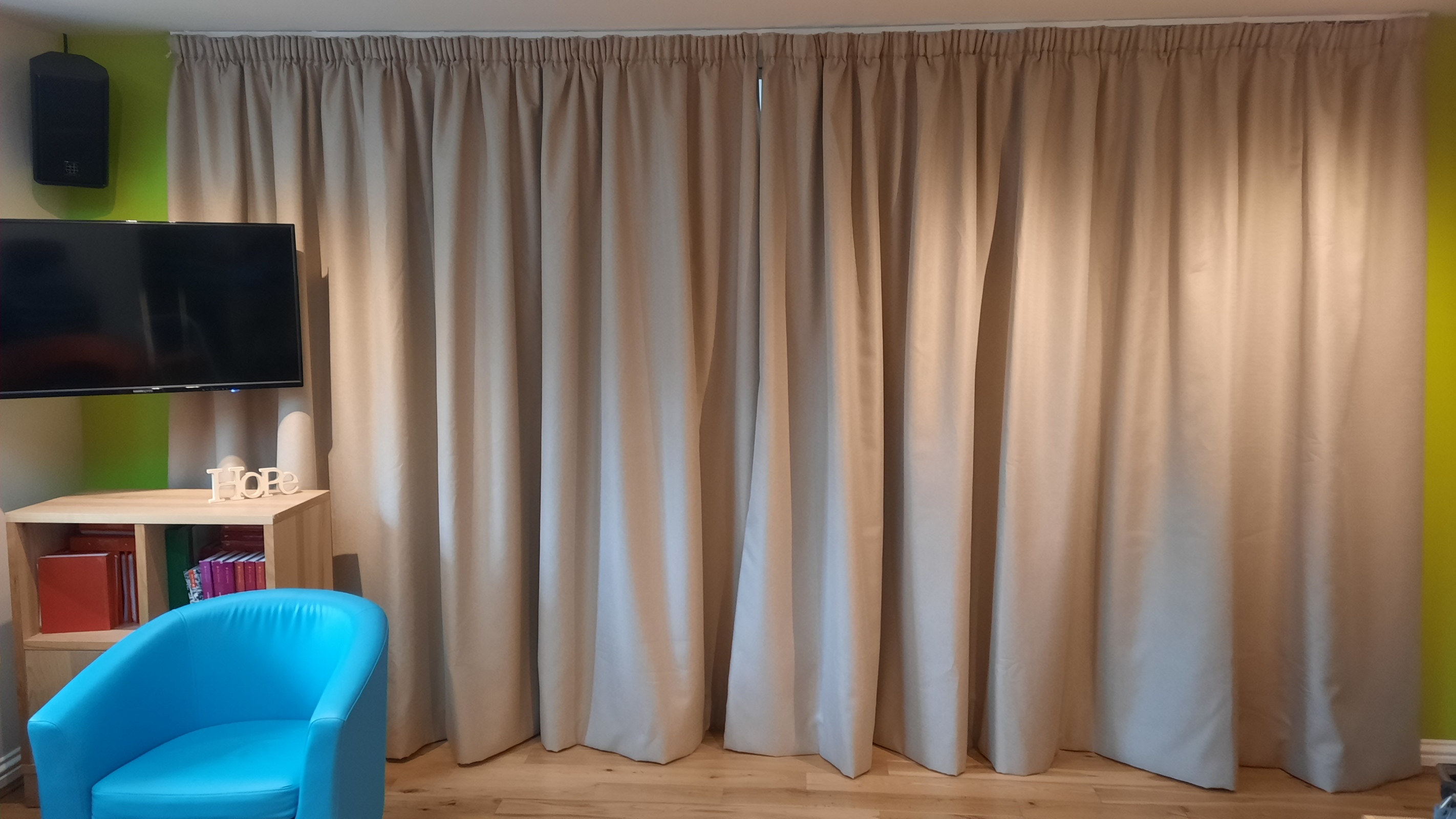
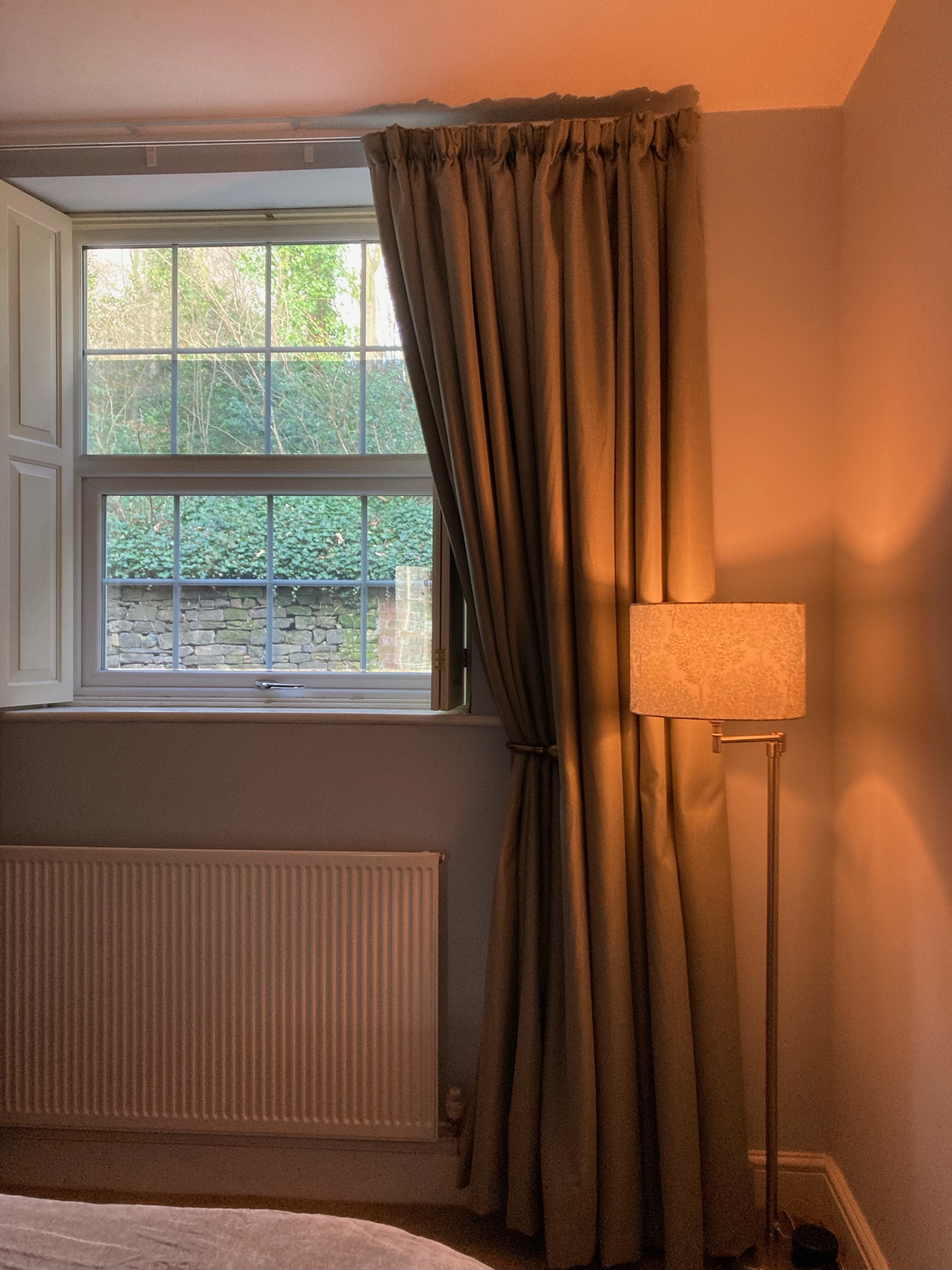
Sound insulation reduces transmission of sound from one space to another. Our curtain has a weighted Rw of 11 dB (2-layer) or 12 dB (3-layer) tested in isolation as a room divider. At the frequencies human hearing is most sensitive to - 800 Hz to 2,000 Hz where voices and traffic sit - the improvement reaches up to 14 dB (2-layer) and up to 16 dB (3-layer). Over a double glazed window, our tested improvement is +4 dB weighted average, taking the window from 29 dB to 33 dB.
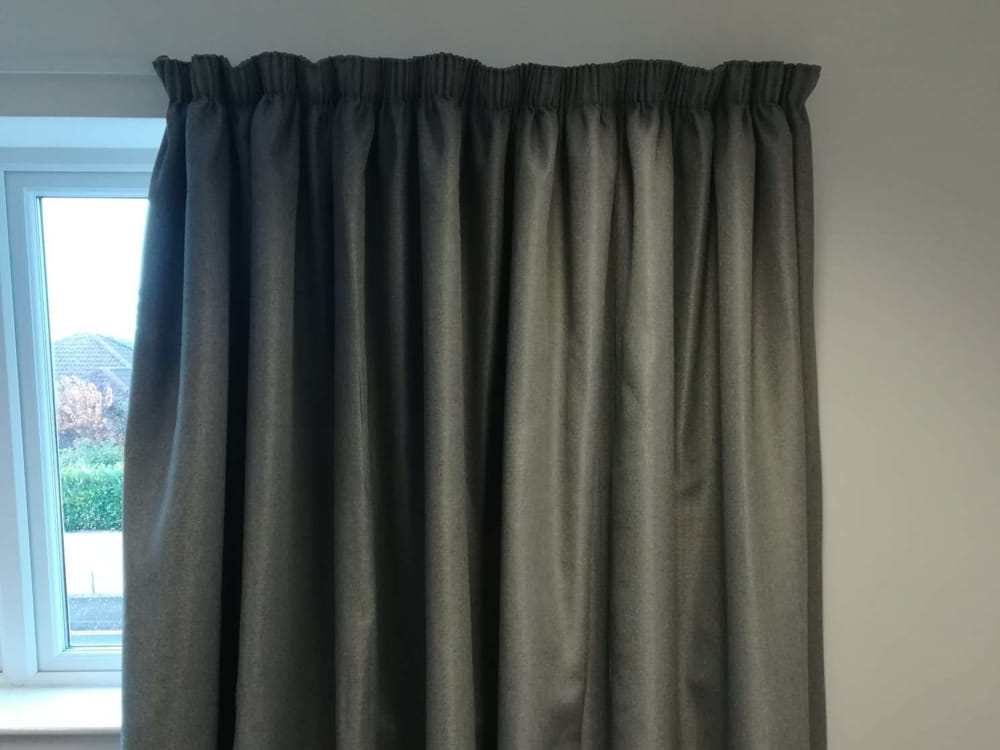
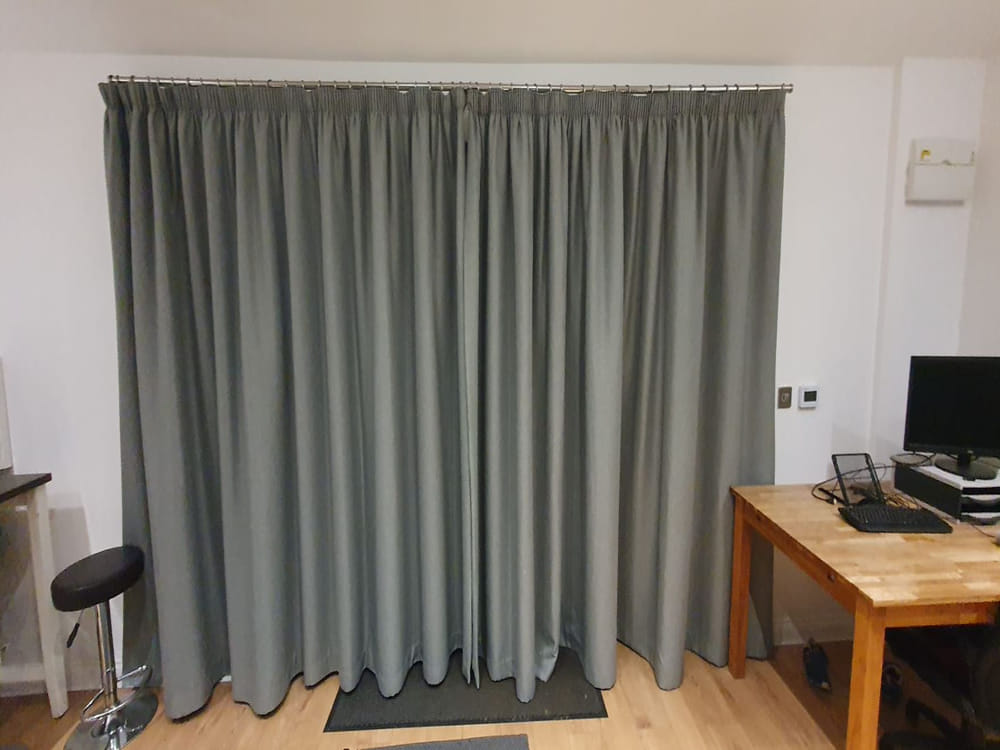
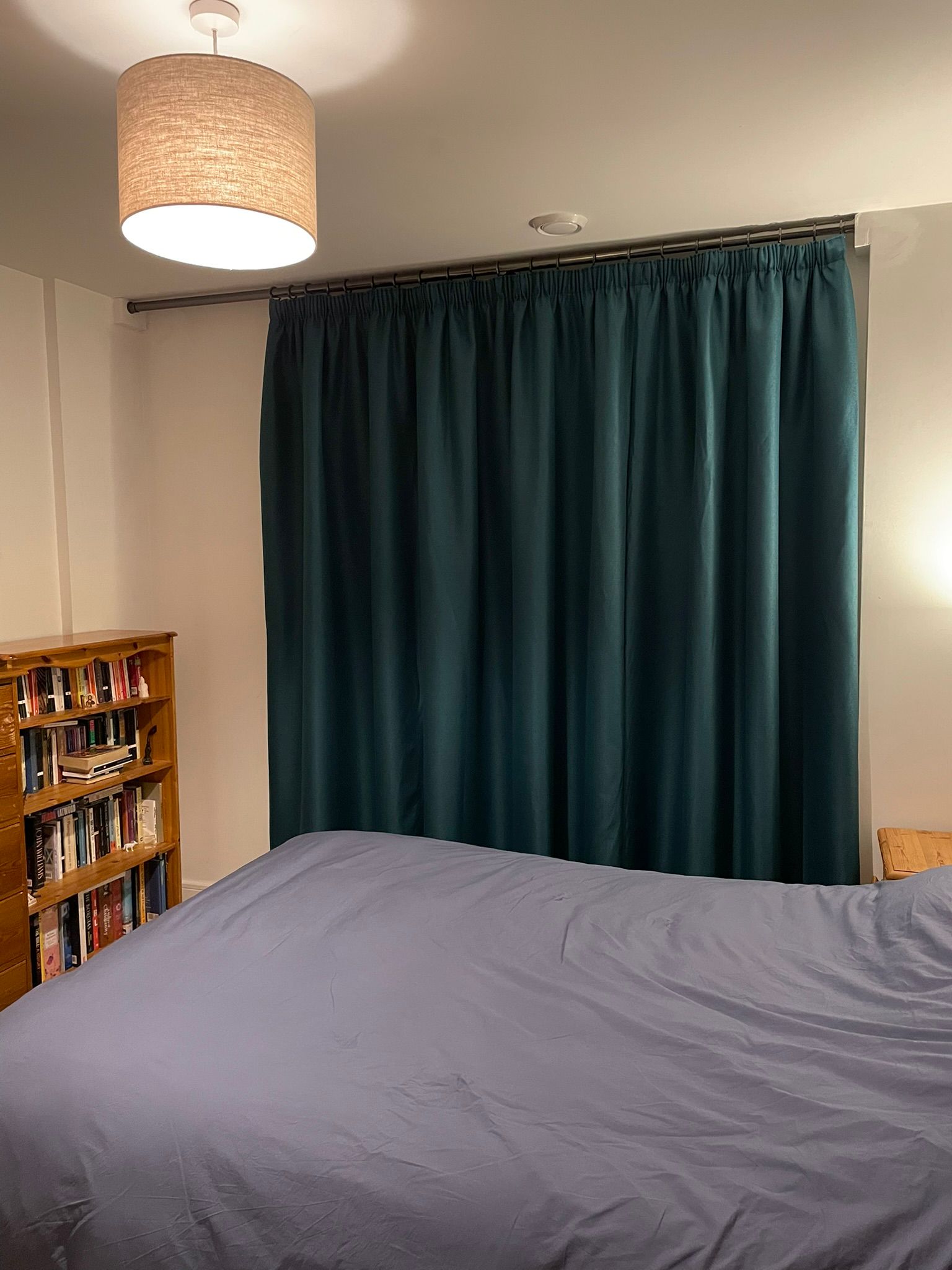
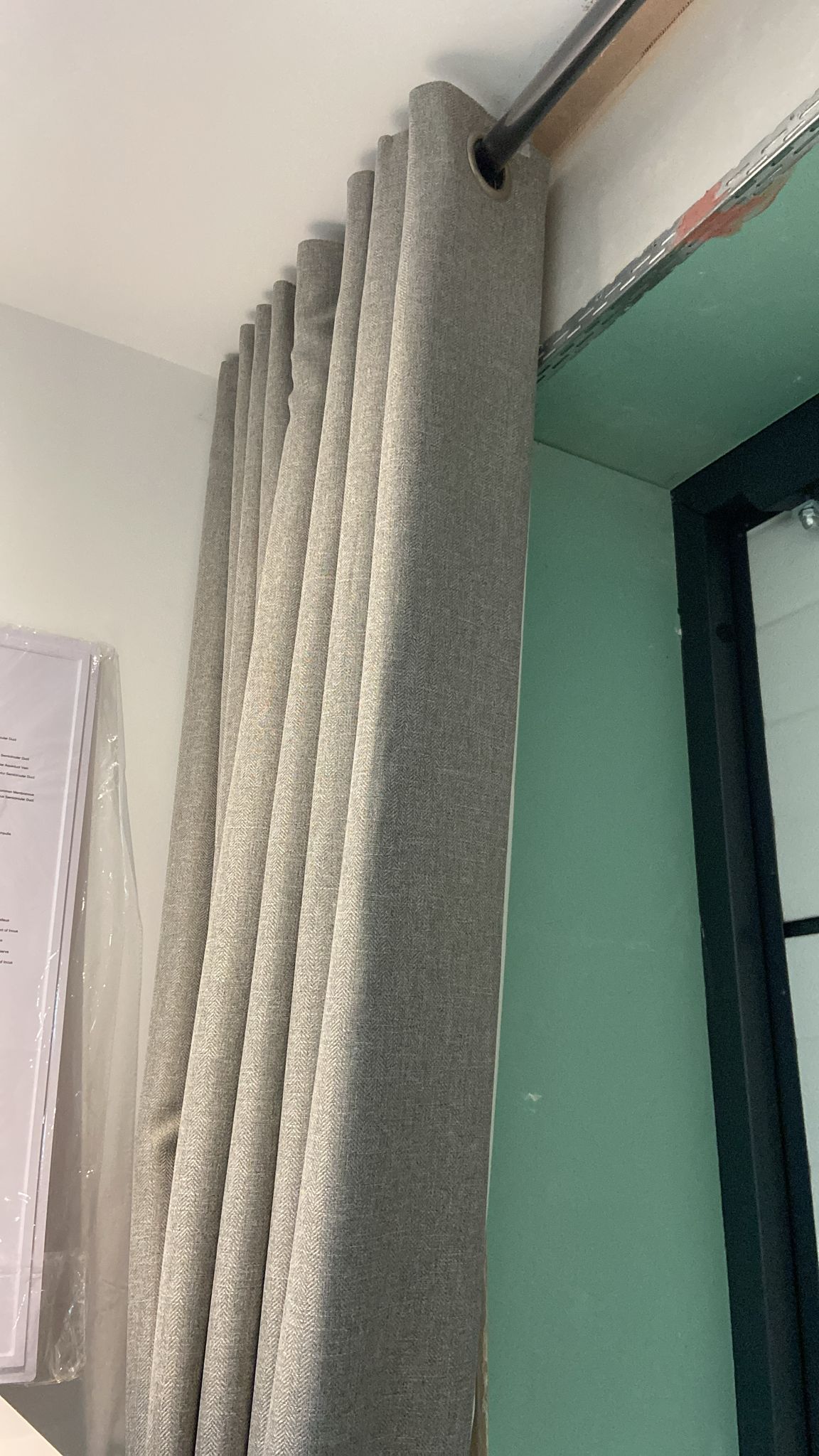
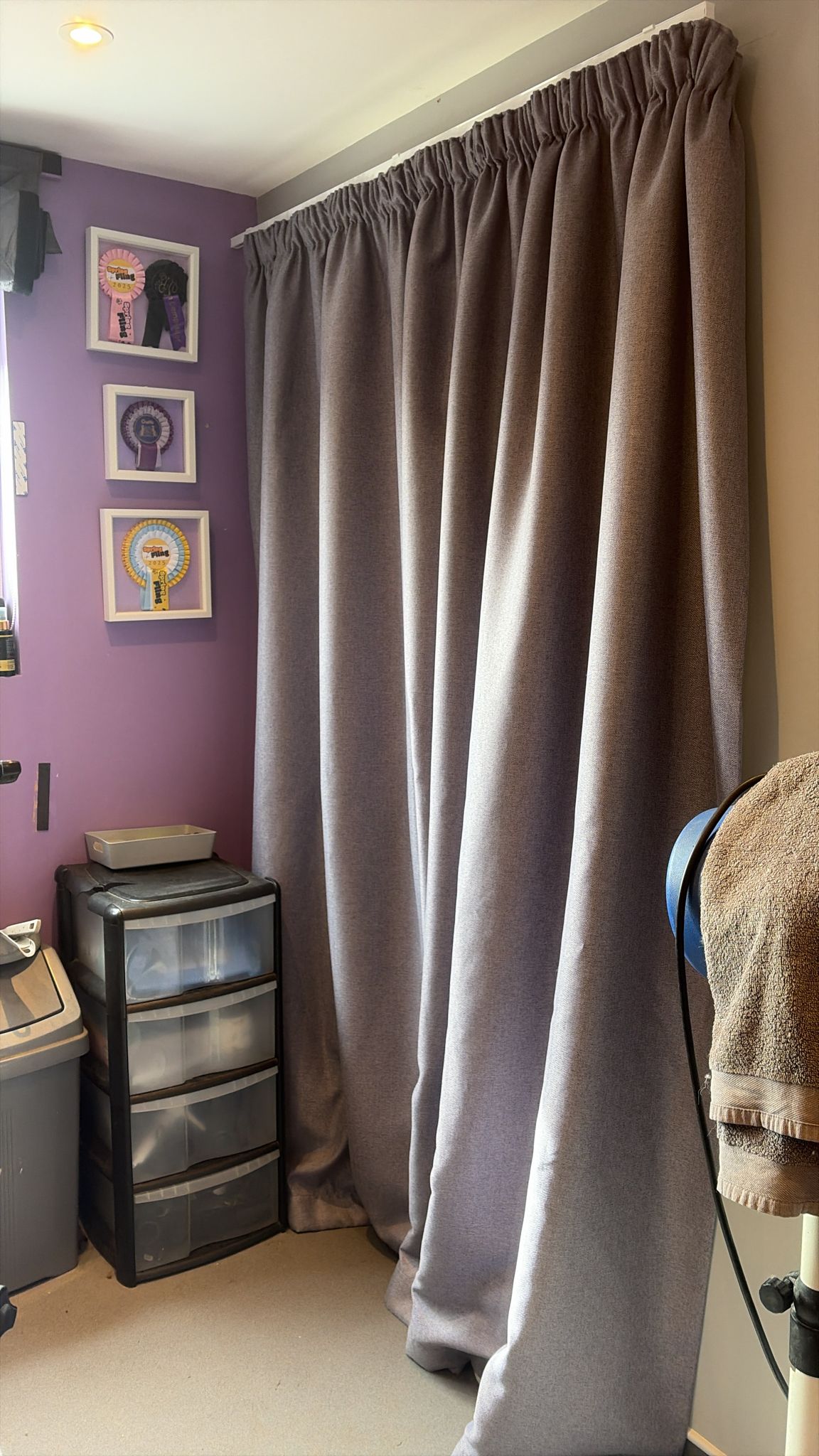
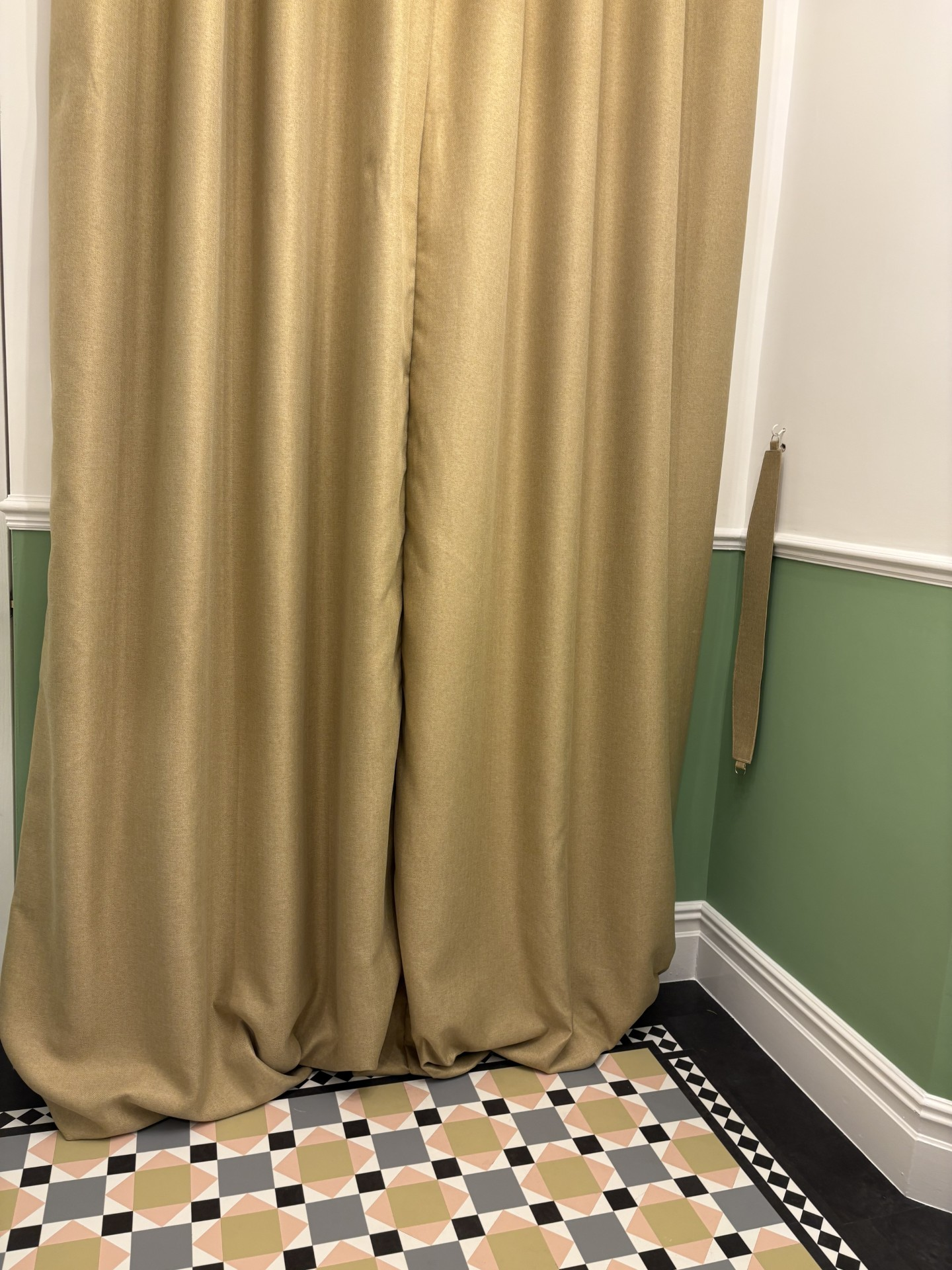
Fabric construction: Our herringbone face fabric is 360 gsm. Combined with the acoustic lining at 370 gsm, the total weight exceeds 1 kg per square metre. This density is what gives the curtain its acoustic and thermal performance.
Honest note on lab vs real-world performance
The weighted Rw figure is a certified average across all frequencies including bass ranges where curtains have limited effect. At the voice and traffic frequencies that matter most, performance is higher - up to 14 dB (2-layer) and up to 16 dB (3-layer) as a room divider. Real rooms will be approximately 2 to 3 dB lower than lab values due to gaps and room geometry. We publish every certificate so you can verify every claim.